A Tomb That Rewards Patience, Not Constant Action
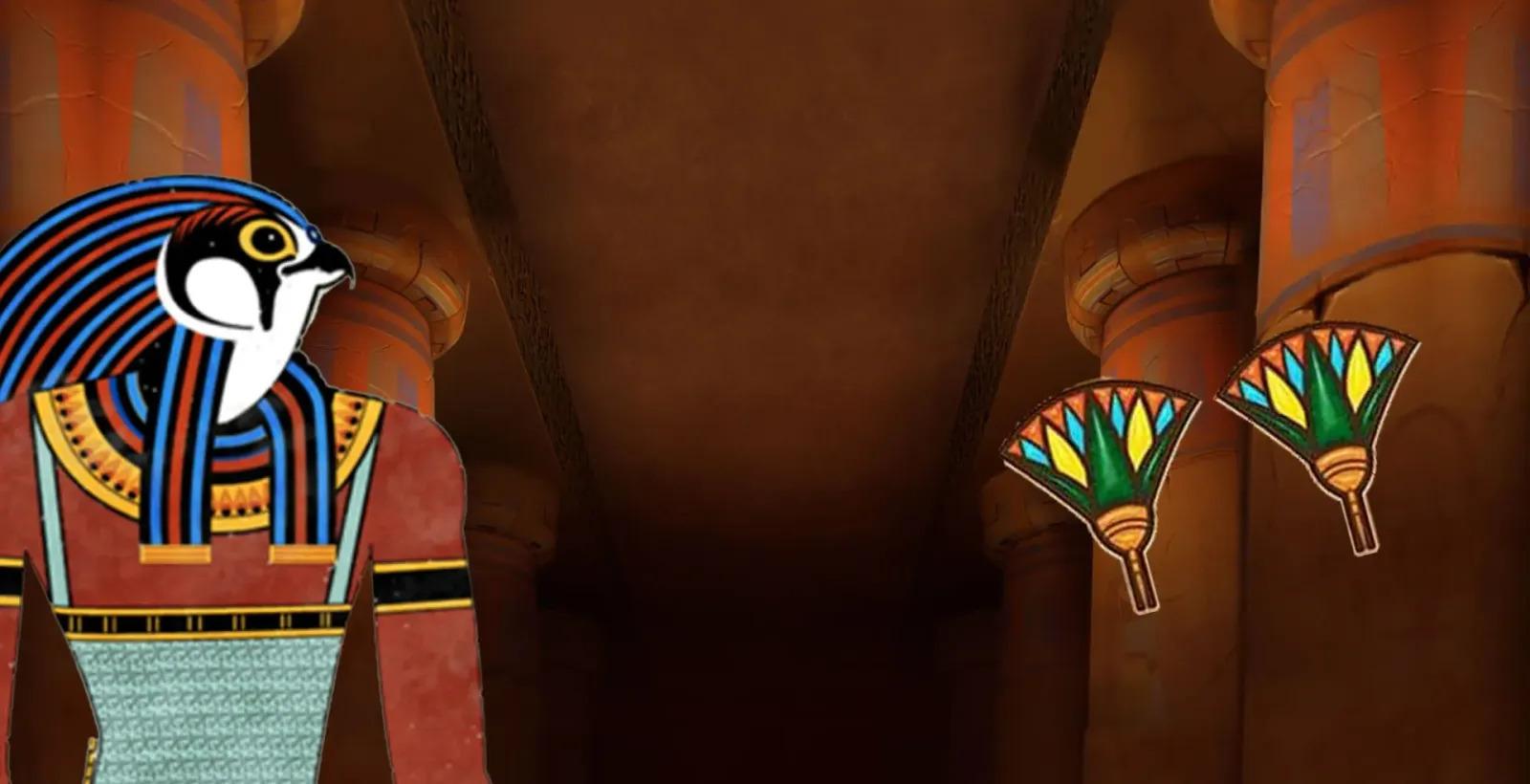
Eye of Horus: Rise of Egypt is Blueprint Gaming’s harder-hitting update on a formula the studio has been running since 2016. This 5x3, 10-line video slot sets you inside a brownish, hieroglyph-covered tomb, with statues, frescoes and the falcon-headed god Horus staring back from the reels. It is not trying to reinvent the classic Egyptian slot. Instead it takes the expanding-wild, symbol-upgrade engine that made the original Eye of Horus a staple and pushes it further with a new Scatter Collect wild-multiplier system that did not exist in the earlier versions.
If you have played the original or its Megaways spin-off, the DNA here will feel familiar immediately. What changes is the ceiling. Where the earlier games were comfortable mid-tier slots, Rise of Egypt is built around a 50,000x stake win potential, high volatility, and a free spins round that can spiral upward through five separate upgrade stages. That combination is what separates this sequel from being just another lick of paint on an old formula.
Where It Sits in the Eye of Horus Family
The Eye of Horus name traces back to Blueprint’s land-based catalog under the Merkur group, and the brand has spread across several releases: the 2016 original, an Eye of Horus Megaways version, The Golden Tablet, and assorted retail cabinets. Rise of Egypt keeps the signature moves — reel-filling wilds, a picture-symbol upgrade ladder — and layers the Scatter Collect mechanic on top. For players who found the earlier entries a touch too gentle, this is the sharper, higher-variance answer.
Who Actually Enjoys This Game
This is not a slot for someone chasing frequent small wins. It suits players who like a classic 10-line Egyptian theme, who want free spins that genuinely evolve as they play rather than just repeating the base game with a multiplier slapped on, and who are comfortable with high volatility and a win ceiling that runs into six figures. If you already rate the original Eye of Horus but wished it hit harder, this sequel was built with you in mind.
The Expanding Wild That Drives Everything
Every mechanic in this game radiates outward from a single symbol: the God Horus wild. Land it on any reel, in the base game or during free spins, and it expands to cover that entire reel, substituting for every symbol except the scatter. Land two or three wilds on the same spin and you can end up with multiple full reels turned wild at once — the moment that separates a forgettable spin from a genuinely exciting one.
Why the Base Game Feels Quiet
Outside of these expanding-wild hits, the base game is honestly uneventful. That is not a flaw so much as a consequence of high volatility: the raw paytable values are modest by design, with even the top Eye of Horus symbol paying only 5x/20x/50x for three, four or five matches. The real weight of this game sits somewhere else entirely, and if you are spinning the base game expecting steady returns, you will spend long stretches watching the reels do very little. That rhythm is intentional, not a bug in the design.
What the Wild Actually Changes
In the base game, an expanding wild simply boosts the win it lands into by covering a whole reel with substitutes. In free spins, though, that same wild does three jobs at once: it substitutes for symbols, it triggers a symbol upgrade, and it can add extra spins to the round. That triple duty is the reason free spins carry this game’s entire identity, and why understanding the free-spins rules matters more here than in most slots.
Free Spins and the Upgrade Ladder
Land three or more scatter symbols — the tomb entrance icon — and you trigger 12 free spins, plus a direct scatter payout of 2x, 20x or 50x your stake depending on whether you hit three, four or five. That upfront payout is a nice touch, but it is a footnote next to what happens once the round actually starts.
How the Upgrade Mechanic Works
Every wild that lands during free spins upgrades the lowest active picture symbol to the next level up, permanently removing the lower symbol from the game for the rest of that round. Card symbols — A, K, Q, J — sit outside this ladder and never upgrade. The picture symbols run through five upgrade levels, and if enough wilds land, you can end up with a reel set stripped down to nothing but the Eye of Horus among the picture symbols. That is the moment the payout table stops looking modest and starts looking dangerous, because every remaining picture-symbol win is now paying at the top rate.
Extra Spins for Every Wild You Land
On top of the upgrade effect, wilds during free spins also extend the round itself:
- 1 wild on a spin adds +1 free spin
- 2 wilds on a spin add +3 free spins
- 3 wilds on a spin add +5 free spins
This stacking is what turns a modest 12-spin trigger into something that can run considerably longer, provided the wilds keep showing up.
Scatter Collect and the Climbing Multiplier
Scatters that land during free spins do not just sit there — they get collected toward a running total. Every four collected scatters award additional free spins and add +1x to a multiplier that applies specifically to wins involving wild symbols. That multiplier keeps climbing with each retrigger, up to a hard cap of x5. Reaching that x5 multiplier while the board is stacked with upgraded Eye symbols is exactly the scenario the 50,000x maximum win depends on — it does not happen by accident, and it requires a genuinely long, wild-heavy free-spins run to line up.
The Gamble Feature
After a win, you have the option to gamble it for a chance to double or quadruple the amount. It is a simple risk mechanic sitting outside the core math of the slot, and it does not touch the RTP calculation on the base game itself — it just adds a coin-flip layer on top of a result you have already banked.
The Numbers Behind the Tomb
Understanding the payout mechanics is one thing; understanding the mathematics behind them is what actually tells you what kind of game you are sitting down to play.
Return to Player, and Why the Version Matters
The default RTP on Eye of Horus: Rise of Egypt sits at 94.50%, which means the game holds back 5.5% of turnover over the long run. That is clearly below the roughly 96% average you will find across the wider slot market, and it is worth knowing that RTP is not fixed across every setup. A 93.00% configuration exists at some operators, pushing the house edge to 7%, while a rarer 96.31% variant is also certified. The exact figure running at any moment is printed in the game’s own rules screen, and checking it before you commit real money is the single most useful habit you can build with this title — arguably more impactful on your results than any in-game decision you will make.
Volatility and the Win Cap
High volatility means variance, not danger dressed up in fancy language — it simply describes how unevenly the wins are distributed. Here, that plays out as long, quiet stretches punctuated by free-spins runs that do the real work. The maximum win is capped twice: at 50,000x the stake, and separately at 250,000 in the play currency, whichever limit is reached first. At a 100 stake, the cash cap becomes the binding constraint well before the multiplier cap does, so the full 50,000x is realistically only reachable at lower and mid-range bets. Some operator configurations even list a 5,000x ceiling instead, which is a considerable difference worth checking in the rules before you assume the bigger number applies to your session.
What the Math Rules Out
Every spin runs on a random number generator at the moment you press spin, independently of any spin before or after it. No betting pattern, timing trick, or streak-reading habit changes that outcome, and nothing about wild placement, scatter timing or upgrade sequencing can be forecast in advance. This is worth being direct about, because Eye of Horus: Rise of Egypt is legitimate and its outcomes are produced by a certified RNG rather than anything resembling a fixed script — the game is not rigged in the sense that some players worry about, but it is also not beatable through skill or pattern play. If a system, signal channel or app claims to predict this slot’s wilds or scatters, it has no access to the game server and cannot actually know what the next spin holds; the honest way to explore predictor claims is to understand why they don’t hold up mathematically rather than to test one with real stakes.
Playing It Across Devices
Eye of Horus: Rise of Egypt runs on HTML5, which means it opens directly inside a browser on desktop, tablet or mobile without any download. There is no standalone native app for this game, and that detail matters more than it might seem.
Browser Play and the Mobile Layout
The mobile layout keeps every feature and stake identical to desktop — nothing is stripped down for the smaller screen. What differs between one setup and another is the RTP version in play, and that depends on the operator running the game, not on the device you are using. You can pin the game page to your home screen as a shortcut, which gives a fullscreen, app-like feel without an actual install. For a closer look at how that works across iOS, Android and desktop browsers, the mobile play options are worth reviewing before you settle on a device.
A Word on Fake Apps
Any APK file or app-store listing claiming to be a standalone Eye of Horus Rise of Egypt app is not an official Blueprint Gaming product. The only physical, non-browser version of this game is the licensed retail cabinet, which runs its own Power Play and Spin to Win features and is a different build entirely from what you play online. If you come across a downloadable app promising this slot, treat it as a red flag rather than a shortcut.
Getting a Feel for the Rhythm Before Betting
Because the base game is intentionally quiet and the real payout structure lives inside free spins, spending time in demo mode first is not a wasted step — it is the fastest way to understand how this particular slot actually behaves before any money is on the table. The demo runs the identical math with play credits, so the upgrade ladder, the wild expansions and the Scatter Collect meter all behave exactly as they would in a paid session; you can try the free demo version to see how quickly, or how slowly, a bonus round can escalate.
Bankroll Sizing for a High-Volatility Slot
Given how concentrated the payouts are in free spins, sizing your bankroll to survive at least 200 spins is a reasonable baseline for this kind of variance. The 0.10 minimum bet keeps every feature fully accessible — nothing here is bet-gated — and at that stake the 250,000 cash cap becomes irrelevant to your session anyway. Turbo and hyper spin speeds increase how many decisions you make per minute, which is exactly why setting deposit, loss and time limits before you start matters more on a fast, high-volatility slot than on a slower one. Anyone wanting a fuller rundown of stake sizing and session pacing can look at the strategy guidance built specifically around this title’s math.
Setting Realistic Expectations
The 50,000x figure sitting at the top of this game’s potential is entertainment math, not a target to plan a session around. It requires a specific and fairly rare combination: a long free-spins run, at least five wilds triggering successive upgrades, a fully upgraded board of Eye symbols, and the wild multiplier sitting at its x5 ceiling. Most sessions will not get anywhere near that. Play with limits set in advance, walk away when a session stops being enjoyable, and treat every spin as already decided the moment you press the button, because that is exactly how the RNG behind this game actually works.
Eye of Horus: Rise of Egypt earns its place in the series by being honest about what it is: a high-variance, wild-driven Egyptian slot with a genuinely engaging upgrade system in free spins and a below-average RTP that you should check before every session. It rewards players who understand its rhythm and accept its ceiling for what it is — a rare six-figure possibility sitting atop a game built mostly on patience.